
quick assessment for dysarthria pdf
Article Plan: Quick Assessment for Dysarthria (PDF Focus) ⏤ 03/24/2026
This article details streamlined methods for evaluating dysarthria utilizing readily available PDF-based tools, specifically the Newcastle Dysarthria Assessment Tool (N-DAT),
published by NSW Adult Speech Pathology in December 2015.
We will explore efficient assessment protocols, scoring, interpretation, and treatment planning implications, all centered around practical PDF implementation for speech-language pathologists.
Dysarthria, a motor speech disorder, impacts articulation, respiration, and voice; rapid, accessible assessments are crucial for timely intervention. PDF-based tools, like the N-DAT,
offer efficient screening.
This article focuses on utilizing downloadable PDFs for quick dysarthria evaluations, streamlining the initial assessment process for speech-language pathologists in clinical settings.
What is Dysarthria?
Dysarthria represents a group of motor speech disorders resulting from impairments in the neurological control of speech musculature. Unlike aphasia, which affects language formulation, dysarthria impacts the execution of speech. This means the message itself is intact, but the physical ability to articulate it is compromised.
Symptoms manifest across several speech domains, including articulation (imprecise consonant production), respiration (weak voice, breathiness), phonation (hoarseness, strained voice), resonance (hypernasality or hyponasality), and prosody (monotone or slow rate).
The underlying causes are diverse, ranging from stroke and traumatic brain injury to neurodegenerative diseases like Parkinson’s or Amyotrophic Lateral Sclerosis (ALS). A quick assessment, utilizing tools like the N-DAT, helps differentiate dysarthria from other speech sound disorders and provides a baseline for tracking progression.
Understanding the specific type of dysarthria is vital for targeted therapy, and initial PDF-based screenings can offer valuable clues.
The Need for Rapid Assessment
In many clinical settings, time is of the essence. Rapidly identifying and characterizing dysarthria is crucial for initiating appropriate intervention and improving patient outcomes. Delays in assessment can hinder access to vital therapies, potentially exacerbating communication difficulties and impacting quality of life.
Quick assessments, particularly those leveraging readily available PDF resources like the N-DAT, offer a practical solution. They allow clinicians to efficiently screen for dysarthria in diverse settings – from acute care to outpatient clinics – without requiring extensive specialized equipment.
Early identification also facilitates accurate prognosis and informs realistic treatment goals. A swift evaluation can guide decisions regarding assistive technology, such as AAC, and optimize rehabilitation strategies.
PDF-based tools streamline the process, offering portability and ease of administration, making rapid assessment a feasible and valuable component of comprehensive speech-language pathology practice.
Scope of this Article: Focusing on PDF-Based Tools
This article deliberately narrows its focus to the application of Portable Document Format (PDF) resources for the quick assessment of dysarthria. While numerous assessment methods exist, we prioritize those easily implemented using downloadable and printable materials, specifically centering on the Newcastle Dysarthria Assessment Tool (N-DAT).
We acknowledge the existence of more comprehensive, standardized evaluations, but our aim is to provide practical guidance for clinicians seeking efficient, accessible screening options. This approach is particularly relevant in resource-constrained environments or when initial triage is required.
The discussion will encompass the N-DAT’s components, administration, scoring, and interpretation, all within the context of its PDF format. Brief mentions of other PDF-adaptable tools will be included, but the primary emphasis remains on the N-DAT as a readily available and effective option.

Understanding the Newcastle Dysarthria Assessment Tool (N-DAT)
The N-DAT, developed by the NSW Adult Speech Pathology group in Newcastle, offers a concise, standardized method for evaluating dysarthric speech characteristics.
Overview of the N-DAT
The Newcastle Dysarthria Assessment Tool (N-DAT) is a brief, clinically focused assessment designed for quick evaluation of speech intelligibility in individuals with dysarthria. It’s a valuable resource for speech-language pathologists needing an efficient method to gauge speech production difficulties.
The N-DAT comprises several key components, including diadochokinesis tasks, reading passages, and a speech intelligibility assessment. These elements collectively provide a snapshot of articulatory precision, speech rate, and overall clarity.
Notably, the N-DAT is readily accessible as a PDF document, facilitating easy administration and scoring. This accessibility makes it particularly useful in diverse clinical settings where time and resources may be limited. The tool was created by the NSW Adult Speech Pathology Acquired Communication Impairment EBP Group.
N-DAT: A Brief History & Development
The N-DAT emerged from the need for a practical, evidence-based tool to rapidly assess dysarthria in clinical practice. Developed by the NSW Adult Speech Pathology Acquired Communication Impairment EBP Group in Newcastle, Australia, its creation was rooted in a desire to bridge the gap between comprehensive, time-consuming assessments and the demands of busy clinical environments.
Published in December 2015, the N-DAT underwent rigorous development and refinement, incorporating insights from experienced speech-language pathologists. The aim was to create a tool that was both reliable and easy to administer, while still providing valuable diagnostic information.
The PDF format was intentionally chosen to enhance accessibility and usability, allowing clinicians to easily download, print, and utilize the assessment materials. This commitment to practicality has contributed to the N-DAT’s widespread adoption.
Target Population for N-DAT
The Newcastle Dysarthria Assessment Tool (N-DAT) is primarily designed for adults exhibiting acquired dysarthria – speech difficulties resulting from neurological events such as stroke, traumatic brain injury, or neurodegenerative diseases like Parkinson’s disease. It’s not intended for individuals with developmental dysarthria or those whose speech impairments stem from structural abnormalities.
The N-DAT is suitable for individuals with varying degrees of dysarthria severity, allowing for a broad range of assessment. However, clinicians should consider the patient’s cognitive abilities and attention span, as the assessment requires some level of cooperation and focused participation.
While adaptable, the N-DAT is most effective when used with individuals who have sufficient linguistic skills to complete the reading and diadochokinesis tasks. Careful clinical judgment is crucial when applying the tool to individuals with co-occurring communication impairments.
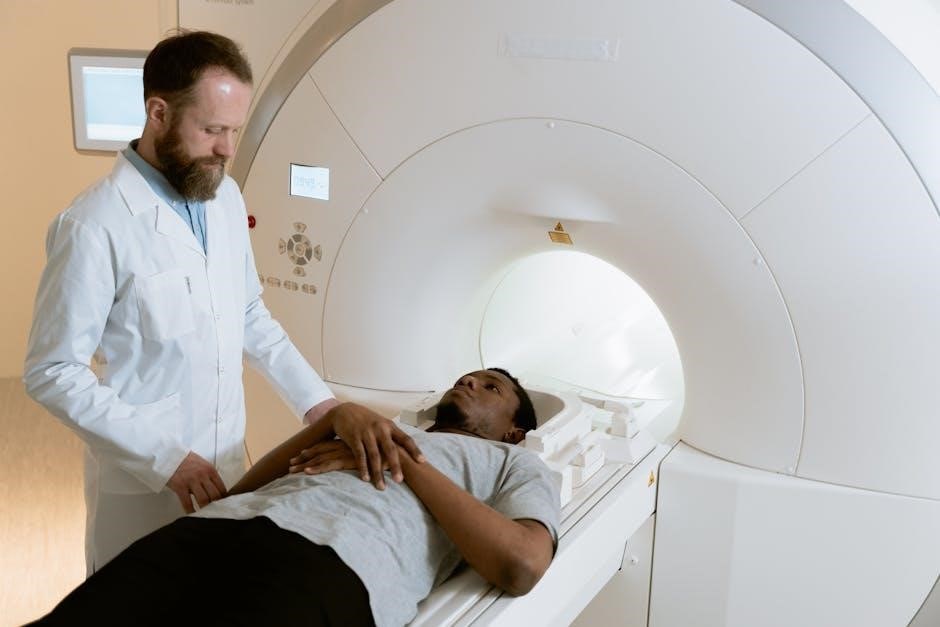
Components of the N-DAT PDF Assessment
The N-DAT PDF comprehensively evaluates dysarthria through Diadochokinesis tasks, reading passages assessing articulation, and a standardized speech intelligibility assessment for clarity.
Diadochokinesis (DDK) Tasks
Diadochokinesis (DDK) tasks within the N-DAT PDF assess the speed and accuracy of articulatory movements, crucial for identifying dysarthric impairments. These tasks involve repetitive syllable productions, such as “pa-ta-ka” and variations, evaluating both rate and consistency.
The PDF provides clear instructions for administration and standardized prompts to ensure consistent testing. Clinicians observe and note any slurring, distortions, or pauses during the repetitions. Scoring focuses on the number of correctly articulated syllables within a specified timeframe.
DDK performance reveals deficits in motor planning and execution, pinpointing potential weaknesses in the articulators. Analyzing errors—substitutions, omissions, or distortions—helps characterize the type of dysarthria. The N-DAT’s DDK component offers a quick, objective measure of motor speech function.
Reading Passages & Assessment
The N-DAT PDF incorporates standardized reading passages to evaluate speech intelligibility and prosody in connected speech. These passages, carefully selected for phonetic complexity, assess how dysarthria impacts functional communication.
Clinicians record the patient reading aloud and then analyze the recording for articulation errors, vowel distortions, and overall clarity. The assessment focuses on identifying patterns of mispronunciation and assessing the severity of speech impairment.
Scoring considers factors like phoneme accuracy, speech rate, and the presence of pauses or hesitations. This component provides valuable insight into the impact of dysarthria on everyday conversational speech. The reading passage assessment complements the DDK tasks, offering a holistic view of speech production.
Speech Intelligibility Assessment
A crucial component of the N-DAT PDF is the speech intelligibility assessment, designed to quantify how easily a listener can understand the patient’s speech. This is often measured using standardized intelligibility tests, where the patient repeats words or phrases.
The assessment typically involves presenting a list of words to the patient and recording their responses. A trained listener then judges the accuracy of each repetition, calculating a percentage score representing overall intelligibility.
This metric provides a clear, objective measure of the functional impact of dysarthria. Lower scores indicate greater difficulty in being understood, guiding treatment priorities. The N-DAT PDF facilitates efficient scoring and documentation of intelligibility results, aiding in tracking progress.

Administering the N-DAT: A Step-by-Step Guide
This section provides a clear, concise protocol for utilizing the N-DAT PDF, ensuring standardized administration and reliable results for accurate dysarthria evaluation.
Preparing for the Assessment
Prior to administering the N-DAT, ensure you have downloaded and printed the official PDF document from the NSW Speech Pathology EBP Group website. (newcastle-ebp-dysarthria-assessment-tool-n-dat-dec-2015.pdf). Familiarize yourself with each component – Diadochokinesis, reading passages, and intelligibility assessment – to ensure a smooth flow.
Gather necessary materials: a quiet testing environment, a timer, and the standardized reading passages included within the PDF. Confirm the patient understands the instructions and feels comfortable participating. Briefly explain the assessment’s purpose: to evaluate speech clarity and identify any speech difficulties.
Review the patient’s medical history for relevant information, such as neurological conditions or previous speech therapy. This context can aid in interpretation. Finally, have scoring sheets readily available to record observations and scores accurately during the assessment process, maintaining objectivity.
Scoring Procedures for Each Component
The N-DAT PDF provides specific scoring guidelines for each assessment section. For Diadochokinesis (DDK) tasks, count the number of correctly articulated syllables within a specified timeframe, noting any distortions or omissions. Reading passages are scored based on intelligibility – typically using a percentage correct based on key words.
Speech intelligibility is often assessed using a standardized scale, such as percentage correct scores or a subjective rating scale evaluating overall clarity. The PDF outlines specific criteria for assigning scores based on observed speech characteristics. Record all scores meticulously on the provided scoring sheets.
Ensure consistency in scoring by adhering strictly to the N-DAT’s defined parameters. Document any deviations from standardized procedures. Total scores are then calculated to determine overall dysarthria severity.
Time Required for N-DAT Administration
The N-DAT is designed as a relatively quick assessment tool, facilitating rapid initial evaluation of dysarthria. Complete administration, including all components – DDK tasks, reading passages, and speech intelligibility assessment – typically requires approximately 15-20 minutes.
However, the actual time may vary depending on the patient’s fatigue level, cognitive abilities, and the severity of their speech impairment. Allow for flexibility and breaks as needed. Scoring and documentation will add an additional 10-15 minutes to the overall process.
Its brevity makes the N-DAT a practical option for busy clinical settings or initial screenings, providing a valuable snapshot of speech function without extensive time commitment.

Interpreting N-DAT Results
N-DAT scores offer insights into dysarthria severity, guiding clinical decisions. Analyzing patterns across components can hypothetically suggest underlying motor speech disorder characteristics.
Severity Levels Based on N-DAT Scores
The N-DAT utilizes a scoring system to categorize dysarthria severity, providing a quantifiable measure of speech impairment. While specific cut-off scores may vary based on clinical judgment and patient population, general guidelines exist.
Mild dysarthria typically presents with N-DAT scores indicating minimal impact on intelligibility and communication effectiveness. Individuals may exhibit subtle articulation errors or slightly reduced speech rate.
Moderate dysarthria corresponds to intermediate N-DAT scores, reflecting noticeable speech distortions, reduced loudness, and some difficulty with intelligibility, particularly in complex sentences.
Severe dysarthria is indicated by significantly impaired N-DAT scores, demonstrating substantial articulation errors, severely reduced intelligibility, and significant limitations in communicative function.
It’s crucial to remember that N-DAT scores are not absolute; they should be interpreted alongside other clinical observations and the patient’s overall functional communication abilities.
Identifying Specific Dysarthria Types (Hypothetical based on patterns)
While the N-DAT isn’t a diagnostic tool for specific dysarthria types, patterns in performance can offer hypothetical insights. For example, consistently poor performance on diadochokinesis tasks, coupled with imprecise consonant articulation, might suggest ataxic dysarthria.
Conversely, slow rate, strained voice quality, and reduced loudness could hypothetically point towards hypokinetic or hyperkinetic dysarthria. However, these are preliminary observations.
Significant errors on reading passages, alongside reduced intelligibility, may suggest spastic dysarthria.
It’s vital to emphasize that these are hypothetical associations. A comprehensive neurological examination and detailed case history are essential for accurate dysarthria classification.
The N-DAT provides valuable data, but should not be used in isolation to determine dysarthria subtype.
Limitations of N-DAT Interpretation
The N-DAT, as a brief screening tool, possesses inherent limitations. It doesn’t provide a definitive diagnosis, nor does it fully capture the complexity of dysarthria. Cultural and linguistic factors can influence performance, potentially leading to misinterpretations.
The PDF format relies on subjective scoring, introducing potential inter-rater variability.
Furthermore, the N-DAT doesn’t assess all dimensions of speech, such as prosody or voice quality in detail.
Co-occurring conditions, like cognitive impairment, can confound results.
Reliance solely on N-DAT scores without considering the patient’s overall clinical picture is discouraged. It’s crucial to integrate N-DAT findings with a comprehensive evaluation, including instrumental assessment when appropriate, for a holistic understanding.

Other PDF-Based Dysarthria Screening Tools (Brief Mention)
Alongside the N-DAT, PDF adaptations of the Frenchay Dysarthria Assessment and resources for the Holmberg Dysarthria Scale offer alternative, quick screening options.
Frenchay Dysarthria Assessment (FDA) — PDF Adaptations
The Frenchay Dysarthria Assessment (FDA) is a comprehensive tool, but clinicians have created unofficial PDF adaptations for streamlined, bedside evaluations. These versions typically focus on key subscales – articulation, intelligibility, and prosody – offering a quicker assessment than the full battery.
While not officially endorsed, these PDFs provide a practical solution for initial screening when time or resources are limited. They often include scoring sheets and simplified instructions, facilitating rapid data collection. However, it’s crucial to acknowledge the lack of standardized validation for these adapted versions.
Clinicians should exercise caution and supplement PDF-based FDA screenings with further, standardized assessment if a detailed diagnostic profile is required. The PDF adaptations serve best as a preliminary indicator of potential dysarthria, guiding subsequent, more thorough evaluations.
Holmberg Dysarthria Scale — PDF Resources
The Holmberg Dysarthria Scale (HDS) offers a global severity rating, and several PDF resources facilitate its use in quick assessments. These PDFs commonly present the scale’s criteria – including intelligibility, articulation, voice quality, and prosody – in a concise, checklist format.
Clinicians can readily document observations and assign a severity level (Normal, Mild, Moderate, Severe) directly on the PDF. This streamlined approach is particularly useful for tracking changes over time or for brief initial evaluations in diverse settings.
However, like FDA adaptations, these PDF versions are often clinician-created and lack formal standardization. Therefore, the HDS PDF should be considered a screening tool, not a definitive diagnostic measure. Further, comprehensive assessment is vital for accurate diagnosis and treatment planning.

Utilizing N-DAT Results for Treatment Planning
N-DAT findings directly inform individualized therapy goals, targeting specific speech deficits identified during the PDF assessment.
Consider AAC options if intelligibility remains significantly impaired despite intervention.
Linking Assessment Findings to Therapy Goals
The N-DAT PDF assessment provides crucial data for establishing targeted therapy objectives. For instance, diminished diadochokinesis scores pinpoint articulatory precision deficits, guiding exercises focused on improving speech muscle coordination and rate control.
Reduced reading passage scores highlight potential issues with prosody, resonance, or phonation. Therapy can then emphasize strategies to enhance vocal quality, breath support, and intonation patterns.
Low speech intelligibility scores necessitate a focus on maximizing communicative effectiveness. This might involve compensatory strategies like slowing speech rate, increasing vocal effort, or utilizing visual cues.
Remember, the N-DAT’s structured PDF format allows for quantifiable progress monitoring, ensuring therapy remains responsive to the patient’s evolving needs and ultimately optimizes functional communication skills.
Considerations for Augmentative and Alternative Communication (AAC)
When N-DAT PDF assessment results indicate severely impaired speech intelligibility despite therapeutic intervention, AAC evaluation becomes paramount. The N-DAT’s objective scoring assists in determining the extent of communication compromise, justifying AAC exploration.
Specifically, consistently low scores across multiple N-DAT components—DDK, reading, and intelligibility—suggest a significant need for alternative communication methods. This isn’t to replace speech therapy, but to supplement and enhance communicative participation.
Consider the patient’s cognitive and motor skills when selecting an AAC system. PDF-based assessment data informs these decisions, guiding the selection of appropriate access methods and output options.
A collaborative approach, involving the SLP, patient, and family, is essential to ensure successful AAC implementation and maximize communicative independence.
Resources & Further Information

Access the downloadable N-DAT PDF via NSW Speech Pathology (link),
and explore resources from relevant speech pathology organizations for continued learning.
Links to Downloadable N-DAT PDF
The Newcastle Dysarthria Assessment Tool (N-DAT) PDF is readily accessible for download, offering a convenient and cost-effective solution for initial dysarthria screenings. This valuable resource, developed by the NSW Adult Speech Pathology Acquired Communication Impairment EBP Group in Newcastle, Australia, can be directly obtained from the NSW Speech Pathology website.

Specifically, the PDF document, titled “newcastle-ebp-dysarthria-assessment-tool-n-dat-dec-2015.pdf,” is available at: https://nswspeechpathologyebp.com/wp-content/uploads/2015/10/newcastle-ebp-dysarthria-assessment-tool-n-dat-dec-2015.pdf.
Published in December 2015, this PDF provides a comprehensive, yet concise, assessment tool for identifying and characterizing dysarthria, facilitating quicker clinical decision-making. Ensure you are accessing the official document from the provided link to guarantee the most up-to-date and accurate version of the N-DAT.
Relevant Speech Pathology Organizations
For further resources and professional development related to dysarthria assessment and treatment, several organizations are invaluable. The American Speech-Language-Hearing Association (ASHA) provides extensive information, guidelines, and continuing education opportunities for speech-language pathologists.
Additionally, Speech Pathology Australia offers similar resources tailored to the Australian context, including information on evidence-based practice (EBP) groups like the NSW Adult Speech Pathology Acquired Communication Impairment EBP Group, who developed the N-DAT.
These organizations frequently host webinars, workshops, and conferences focused on neurological speech disorders, including dysarthria. Exploring their websites and membership options can provide access to cutting-edge research, clinical tools, and networking opportunities with fellow professionals dedicated to improving communication outcomes for individuals with dysarthria.
Continuing Education Opportunities
Staying current with best practices in dysarthria assessment is crucial. ASHA offers numerous continuing education (CE) courses, both online and in-person, covering neurological speech disorders and assessment techniques, including those adaptable for PDF-based tools like the N-DAT.
Speech Pathology Australia similarly provides professional development opportunities, often highlighting evidence-based practices relevant to acquired communication impairments. Look for workshops specifically addressing dysarthria subtypes and assessment protocols.
Consider courses focusing on motor speech disorders, differential diagnosis, and the interpretation of assessment results. Exploring advanced training in areas like dynamic assessment can enhance your clinical skills. Regularly participating in CE activities ensures you’re equipped to provide optimal care and utilize tools like the N-DAT effectively.