
canon digital rebel xt manual
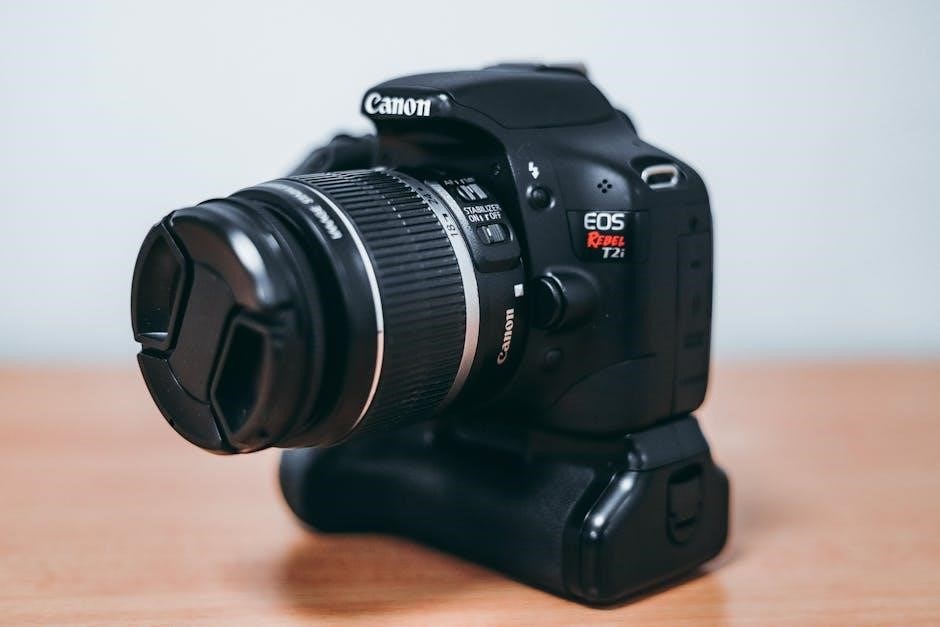
Canon EOS Rebel XT (350D) Manual: A Comprehensive Guide
This guide offers a detailed exploration of the Canon EOS Rebel XT (350D), providing essential instructions for optimal camera usage and performance.
The Canon EOS Rebel XT, also known as the EOS 350D, marked a significant step forward in accessible digital SLR photography. Released in 2005, this 8.0-megapixel camera quickly gained popularity among enthusiasts and aspiring photographers. This manual serves as a comprehensive resource to unlock the full potential of your Rebel XT. It details everything from initial setup and basic shooting techniques to advanced features and troubleshooting.
Understanding its capabilities requires a thorough review of this guide, ensuring you can confidently capture stunning images. The Rebel XT’s compatibility with Canon EF/EF-S lenses further expands its versatility.
Understanding the Manual’s Importance
This manual isn’t just a guide; it’s the key to mastering your Canon EOS Rebel XT (350D). It provides detailed explanations of every function, ensuring you understand how to achieve optimal image quality. Downloading the PDF version offers convenient access to troubleshooting solutions, error message interpretations, and maintenance instructions.
Without it, unlocking the camera’s full potential – including its 8.0-megapixel sensor and DIGIC II processor – becomes significantly harder. Familiarizing yourself with the manual prevents frustration and empowers you to confidently explore advanced shooting techniques.

Camera Features and Specifications
The Rebel XT boasts an 8.0-megapixel CMOS sensor, EF/EF-S lens compatibility, and a DIGIC II image processor, delivering high-resolution, versatile photography.
8.0 Megapixel CMOS Sensor
The Canon EOS Rebel XT features a high-performance 8.0-megapixel CMOS sensor, crucial for capturing detailed and vibrant images. This sensor technology allows for excellent image quality, even in challenging lighting conditions. Compared to CCD sensors, CMOS offers advantages in speed and power efficiency, contributing to the camera’s responsiveness and battery life.
The 8.0-megapixel resolution strikes a balance between file size and image detail, suitable for various printing sizes and online sharing. This sensor, combined with Canon’s image processing, delivers accurate color reproduction and low noise levels, enhancing the overall photographic experience. It’s a key component in the Rebel XT’s ability to produce professional-looking results.
Canon EF/EF-S Lens Compatibility
The Canon EOS Rebel XT boasts full compatibility with Canon’s extensive range of EF and EF-S lenses, offering photographers considerable versatility. EF lenses are the standard full-frame lenses, while EF-S lenses are designed specifically for cameras with APS-C sensors like the Rebel XT, providing a cropped field of view.
This compatibility allows users to choose from a vast selection of lenses to suit various photographic needs, from wide-angle landscapes to telephoto wildlife shots. Utilizing different lenses unlocks creative possibilities and enhances image quality. The lens mount ensures a secure and reliable connection, crucial for optimal performance and image clarity.
DIGIC II Image Processor
The Canon Rebel XT is powered by the DIGIC II image processor, a crucial component responsible for handling image data and delivering exceptional performance. This processor significantly enhances image quality, reduces noise, and accelerates processing speeds.
DIGIC II enables faster start-up times, quicker autofocus operation, and improved continuous shooting capabilities. It also contributes to accurate color reproduction and tonal range, resulting in vibrant and detailed photographs. The processor’s efficiency also aids in extending battery life, allowing for longer shooting sessions. It’s a cornerstone of the camera’s overall functionality.

Getting Started: Initial Setup
Proper setup involves inserting the battery and memory card, setting the correct date and time, and selecting an appropriate shooting mode for your needs.
Inserting the Battery and Memory Card
Begin by locating the battery compartment on the bottom of the Canon EOS Rebel XT. Ensure the camera is powered off before proceeding. Gently slide the battery door latch to open it, and insert the battery pack, aligning the metal contacts correctly. Securely latch the battery door closed.
Next, find the memory card slot, typically located on the side of the camera. Open the card slot cover and insert a compatible memory card (CompactFlash) label-side up. Push it in until it clicks into place. To remove the card, gently press it inwards to release the locking mechanism. Proper insertion and removal prevent damage to both the camera and the memory card.
Setting the Date and Time
To accurately set the date and time on your Canon EOS Rebel XT, navigate to the camera’s menu system. Access the ‘Setup’ menu, usually represented by a wrench icon. Within the Setup menu, locate the ‘Date/Time’ setting. Use the directional buttons to adjust the year, month, day, hour, and minute.
Confirm each selection by pressing the ‘Set’ button. Ensure the date and time are correct, as this information is embedded in the image files’ EXIF data. Accurate time-stamping is crucial for organizing and referencing your photographs later. Double-check your settings before exiting the menu to avoid errors.
Choosing the Shooting Mode
The Canon EOS Rebel XT offers a variety of shooting modes to suit different photographic situations. The mode dial on top of the camera allows quick selection. ‘Auto’ mode is ideal for beginners, letting the camera handle all settings. ‘Program’ (P) mode provides some control over settings like ISO and white balance.
‘Shutter Priority’ (Tv) lets you set the shutter speed, while ‘Aperture Priority’ (Av) controls the aperture. ‘Manual’ (M) mode grants full control. Scene modes, like ‘Portrait’ or ‘Landscape’, optimize settings for specific subjects. Experiment with each mode to understand its effects on your images.

Basic Shooting Operations
Mastering fundamental techniques like focusing, aperture/shutter control, and ISO settings unlocks the Rebel XT’s potential for capturing stunning, high-quality photographs easily.
Understanding Focus Modes (One-Shot, AI Servo)
The Canon EOS Rebel XT offers two primary autofocus modes: One-Shot and AI Servo. One-Shot is ideal for stationary subjects; the camera focuses once when you half-press the shutter button, locking focus until you fully press it. This is perfect for landscapes or portraits where the subject isn’t moving.
AI Servo, conversely, is designed for tracking moving subjects. When activated, the camera continuously adjusts focus as long as you hold the shutter button halfway down, ensuring sharp images even with motion. This mode excels in sports or wildlife photography. Understanding when to utilize each mode is crucial for consistently achieving sharp, well-focused images with your Rebel XT. Experimenting with both will quickly reveal their strengths.
Aperture and Shutter Speed Control
Mastering aperture and shutter speed is fundamental to photographic control on the Canon Rebel XT. Aperture, controlled by the f-stop, dictates the lens opening, influencing depth of field – how much of the image is in focus. Lower f-numbers (e.g., f/2.8) create shallow depth of field, ideal for portraits, while higher numbers (e.g., f/16) yield greater depth, suitable for landscapes.
Shutter speed determines how long the sensor is exposed to light. Faster speeds (e.g., 1/500s) freeze motion, while slower speeds (e.g., 1/30s) allow more light in, but can introduce blur if the camera or subject moves. Balancing these two settings is key to achieving proper exposure and creative effects.
ISO Settings and Image Quality
The Canon Rebel XT’s ISO setting controls the camera’s sensitivity to light. Lower ISO values (e;g., ISO 100) produce cleaner images with less noise, ideal for bright conditions. However, in low light, increasing the ISO (e.g., ISO 800, 1600) allows for faster shutter speeds, preventing blur.
Be aware that higher ISO settings introduce more image noise – graininess that can degrade image quality. The Rebel XT offers several ISO options; experiment to find the best balance between brightness and noise for your specific shooting scenario. Understanding this trade-off is crucial for optimal image results.

Advanced Shooting Techniques
Mastering techniques like exposure compensation, white balance, and metering modes unlocks the full potential of your Canon EOS Rebel XT for stunning results.
Using Exposure Compensation
Exposure compensation is a crucial tool for refining your images beyond the camera’s automatic settings. The Canon EOS Rebel XT allows you to override the metered exposure, brightening or darkening the image as needed. This is particularly useful in challenging lighting situations, such as scenes with strong backlighting or high contrast.
To utilize exposure compensation, locate the +/- button on the camera body. Adjusting the value will shift the exposure; positive values brighten the image, while negative values darken it. Experimenting with different settings allows for creative control and ensures accurate exposure, preventing blown-out highlights or crushed shadows. Remember to reset the compensation to zero when not in use.
White Balance Adjustment
White balance (WB) ensures accurate color rendition in your photographs, compensating for different lighting conditions. The Canon EOS Rebel XT offers several preset WB modes – Auto, Daylight, Cloudy, Shade, Tungsten, Fluorescent, and Flash – each optimized for specific light sources. Auto WB generally performs well, but manual adjustments are often necessary for optimal results.
To adjust white balance, access the WB menu and select the appropriate setting. Custom WB allows you to manually set the color temperature using a white or gray card for precise control. Incorrect WB can result in color casts; for example, tungsten WB will warm up a daylight scene. Experiment to achieve natural-looking colors.
Metering Modes Explained
The Canon EOS Rebel XT features three metering modes: Evaluative, Partial, and Center-weighted Average. Evaluative metering analyzes the entire scene to determine the optimal exposure, suitable for most situations. Partial metering assesses light from a small area (approximately 6.5% of the frame), ideal for subjects with strong backlighting. Center-weighted Average metering prioritizes the center of the frame, diminishing influence towards the edges.
Selecting the correct mode is crucial for accurate exposure. For complex scenes, Evaluative is often best. Partial metering excels with high-contrast subjects, while Center-weighted Average suits portraits or scenes where the subject is centrally located. Understanding these modes empowers precise control over image brightness.

Navigating the Menu System
The Rebel XT’s menu allows customization of settings, including image quality, autofocus, and custom functions, for a tailored shooting experience.
Custom Function Settings
Canon’s Custom Functions within the Rebel XT’s menu system provide a powerful way to personalize your camera’s operation to match your shooting style. These settings allow you to assign specific controls to buttons, tailoring the camera to your individual needs.
You can customize functions related to autofocus, exposure, drive mode, and more. For example, you might assign the AF-ON button to initiate autofocus, freeing the shutter button for focusing and shooting separately. Exploring these options is crucial for maximizing efficiency and responsiveness.
Remember to document your custom settings for easy recall if you reset the camera to factory defaults. Careful configuration of Custom Functions can significantly enhance your photographic workflow.
Picture Style Options
Canon’s Picture Style feature allows you to predefine the look of your images directly within the camera, influencing color, contrast, and sharpness. The Rebel XT offers several preset styles, including Standard, Portrait, Landscape, Neutral, Faithful, and Monochrome.
Each style adjusts the camera’s image processing to suit different subjects and preferences. For instance, Portrait prioritizes skin tones, while Landscape enhances blues and greens. You can also customize these presets or create your own unique Picture Styles.
Experimenting with Picture Styles is a great way to achieve desired results without extensive post-processing, offering creative control at the point of capture.
Understanding the Quick Control Screen
The Quick Control screen provides rapid access to frequently used settings, streamlining your shooting workflow. Accessed by pressing the ‘Q’ button, it displays key parameters like shooting mode, image quality, white balance, and ISO sensitivity.
Navigating the screen is intuitive using the directional buttons and the SET button to confirm changes. This allows for quick adjustments without delving into the full menu system.
Mastering the Quick Control screen significantly enhances shooting efficiency, enabling you to respond swiftly to changing conditions and capture the perfect shot.

Understanding the Viewfinder and LCD Screen
The viewfinder and LCD screen are crucial for composing shots and reviewing images, offering vital information for precise control and assessment.
Viewfinder Information Display
The Canon EOS Rebel XT’s viewfinder presents a wealth of shooting information, enabling precise control without taking your eye from the scene. Key elements include focus points, clearly indicating the area prioritized for sharpness, and exposure settings like aperture and shutter speed, allowing for immediate adjustments.
Additionally, the viewfinder displays shooting mode, white balance, and metering mode, ensuring you’re aware of the camera’s current configuration. A small LCD panel within the viewfinder shows the number of remaining shots based on your memory card capacity. Understanding these displayed elements is fundamental to mastering manual control and achieving desired photographic results with the Rebel XT.
LCD Screen Settings and Display Options
The Rebel XT’s LCD screen offers customizable display settings to suit your preferences and shooting conditions. You can adjust brightness and color tone for optimal viewing. Information displayed includes shooting parameters like aperture, shutter speed, ISO, and white balance, providing real-time feedback.
The LCD also enables image playback with zoom functionality for detailed review. A helpful grid display assists with composition, adhering to the rule of thirds. Furthermore, you can activate a histogram display, crucial for evaluating exposure accuracy and preventing over or underexposed images. These options enhance usability and creative control.
Histogram Interpretation
Understanding the histogram is vital for achieving properly exposed photographs with your Canon Rebel XT. This graphical representation displays the tonal distribution within an image, showing the frequency of each brightness level. A histogram skewed to the left indicates underexposure, meaning the image is too dark, while a right-skewed histogram suggests overexposure and a washed-out appearance.
Ideally, a balanced histogram with tones spread across the range signifies a well-exposed image. Peaks indicate dominant tones; analyzing these peaks helps refine exposure settings. Utilize the LCD screen’s histogram display during shooting to instantly assess and adjust your settings for optimal results.

Troubleshooting Common Issues
This section addresses frequent problems encountered with the Canon Rebel XT, offering solutions for error messages, image noise, and battery optimization.
Error Messages and Solutions
Encountering error messages on your Canon EOS Rebel XT can be frustrating, but often easily resolved. Common errors include “Err 99,” typically indicating a shutter curtain issue requiring professional repair. “Card Full” necessitates either deleting images or inserting a larger capacity memory card.
If you see an “Invalid File Format” error, ensure your card is formatted correctly within the camera’s menu. A “Lens Error” suggests a communication problem between the camera body and the attached lens – try reattaching it.
Consult the manual for a complete list of error codes and their corresponding solutions; many issues can be self-diagnosed and addressed with simple troubleshooting steps.
Dealing with Image Noise
Image noise, appearing as graininess, is common in digital photography, especially at higher ISO settings on the Canon Rebel XT. To minimize noise, shoot at the lowest possible ISO (typically 100 or 200) in well-lit conditions.
When higher ISOs are unavoidable, utilize the camera’s noise reduction feature found within the menu settings. Experiment with different levels to find a balance between noise reduction and image detail preservation.
Post-processing software like Adobe Lightroom or Photoshop offers further noise reduction capabilities, allowing for refined adjustments to improve image clarity and reduce unwanted grain.
Battery Life Optimization
Maximizing battery life on your Canon EOS Rebel XT is crucial for extended shooting sessions. Disable Live View mode whenever possible, as it significantly drains power. Utilize the optical viewfinder for composing shots instead.
Reduce LCD screen brightness and shorten the auto-off timer in the camera’s menu settings. Avoid excessive image review on the LCD; instead, rely on quick histogram checks.
Carry a fully charged spare battery, especially during travel or events. Turn off the camera completely when not in use, rather than leaving it in standby mode.
Maintenance and Care
Regular cleaning and careful handling are vital for preserving the Canon EOS Rebel XT’s performance and longevity, ensuring years of reliable use.
Cleaning the Sensor
Dust on the CMOS sensor can appear as spots in your images, particularly at smaller apertures. The Canon EOS Rebel XT is susceptible to dust accumulation, requiring periodic cleaning. Always use a dedicated sensor cleaning kit – never attempt to clean the sensor with household cleaners or compressed air not specifically designed for this purpose!
Follow the camera’s menu instructions to access sensor cleaning mode, which lifts the mirror and locks it out of the way. Gently sweep a sensor brush across the surface, or use a wet-cleaning system with appropriate fluid. Exercise extreme caution to avoid scratching the delicate sensor. If uncomfortable performing this task, professional sensor cleaning services are readily available.
Caring for the Lens
Proper lens care is crucial for maintaining image quality and extending the lifespan of your Canon EF/EF-S lenses. Regularly inspect the lens elements for dust, fingerprints, or smudges. Use a soft, lint-free microfiber cloth and lens cleaning solution to gently wipe away any debris. Avoid harsh chemicals or abrasive materials that could damage the lens coating.
Always store lenses with the front and rear caps attached, in a cool, dry place. Protect lenses from direct sunlight and extreme temperatures. When changing lenses, avoid touching the glass surfaces. A quality lens case provides excellent protection during transport and storage, preventing accidental scratches or impacts.
Storage and Transportation
Secure storage and careful transportation are vital for protecting your Canon EOS Rebel XT. When not in use, store the camera body and lenses in a dry, dust-free environment, ideally within a dedicated camera bag. Avoid prolonged exposure to extreme temperatures or humidity, which can damage internal components.
During transport, utilize a padded camera bag with customizable dividers to safeguard against shocks and vibrations. Never leave the camera unattended in public places or vehicles. Remove the battery during extended storage periods to prevent potential leakage. Regularly check the bag’s condition for wear and tear.

Downloading the Manual & Resources
Access the Canon Rebel XT manual via the official Canon website, or explore third-party repositories for PDF downloads and helpful online forums.
Official Canon Website for Manual Download
For the most reliable and up-to-date version of the Canon EOS Rebel XT (350D) manual, the official Canon website is the primary resource. Users can typically find a dedicated support section for their specific camera model, allowing for a direct download of the complete instruction manual in PDF format.
Canon provides this service free of charge, ensuring that owners have easy access to comprehensive documentation. The website often includes additional resources, such as software updates and frequently asked questions, further enhancing the user experience. Navigating the Canon support site is straightforward, with clear search functions to locate the correct manual quickly and efficiently.
Third-Party Manual Repositories
Beyond the official Canon website, several third-party repositories offer access to the Canon EOS Rebel XT (350D) manual. Websites like Manual Lib host a collection of user manuals, including those for older Canon camera models. These platforms can be useful if the official website is experiencing issues or if users prefer a different browsing experience.
However, it’s crucial to exercise caution when downloading from unofficial sources, ensuring the file is legitimate and free from malware. While convenient, these repositories may not always have the latest version or offer the same level of support as Canon’s official resources. Always verify the file’s integrity before opening it.
Online Forums and Support Communities
Numerous online forums and support communities are dedicated to Canon cameras, including the EOS Rebel XT (350D). These platforms provide a valuable space for users to ask questions, share experiences, and troubleshoot issues. Websites dedicated to photography often have active threads specifically for older Canon models.
Experienced users frequently offer advice and solutions to common problems, supplementing the information found in the official manual. Participating in these communities can be incredibly helpful for learning advanced techniques and gaining a deeper understanding of the camera’s capabilities. A quick web search will reveal many active forums.